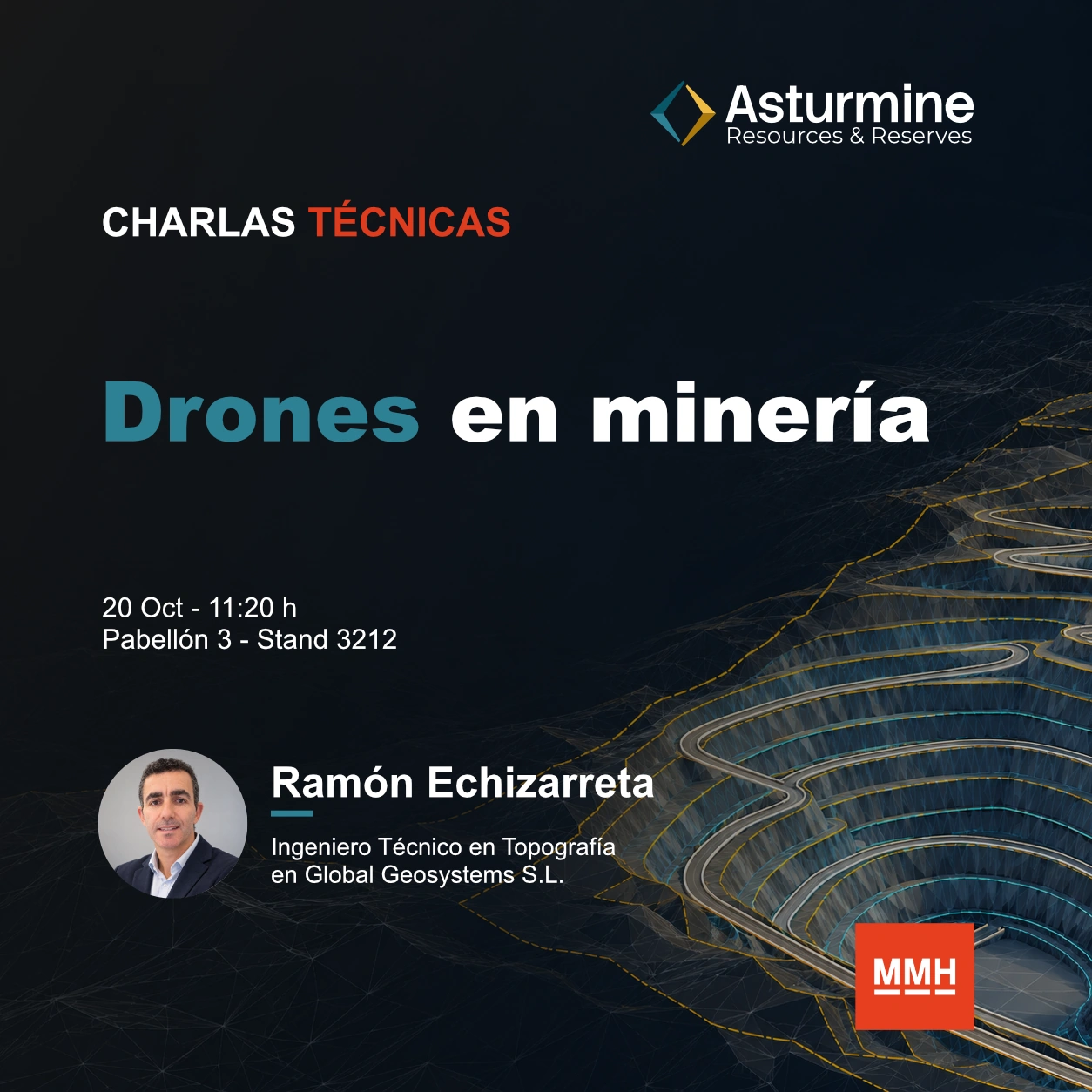
Surveying engineer and DJI Enterprise technical sales adviser · Global Geosystems
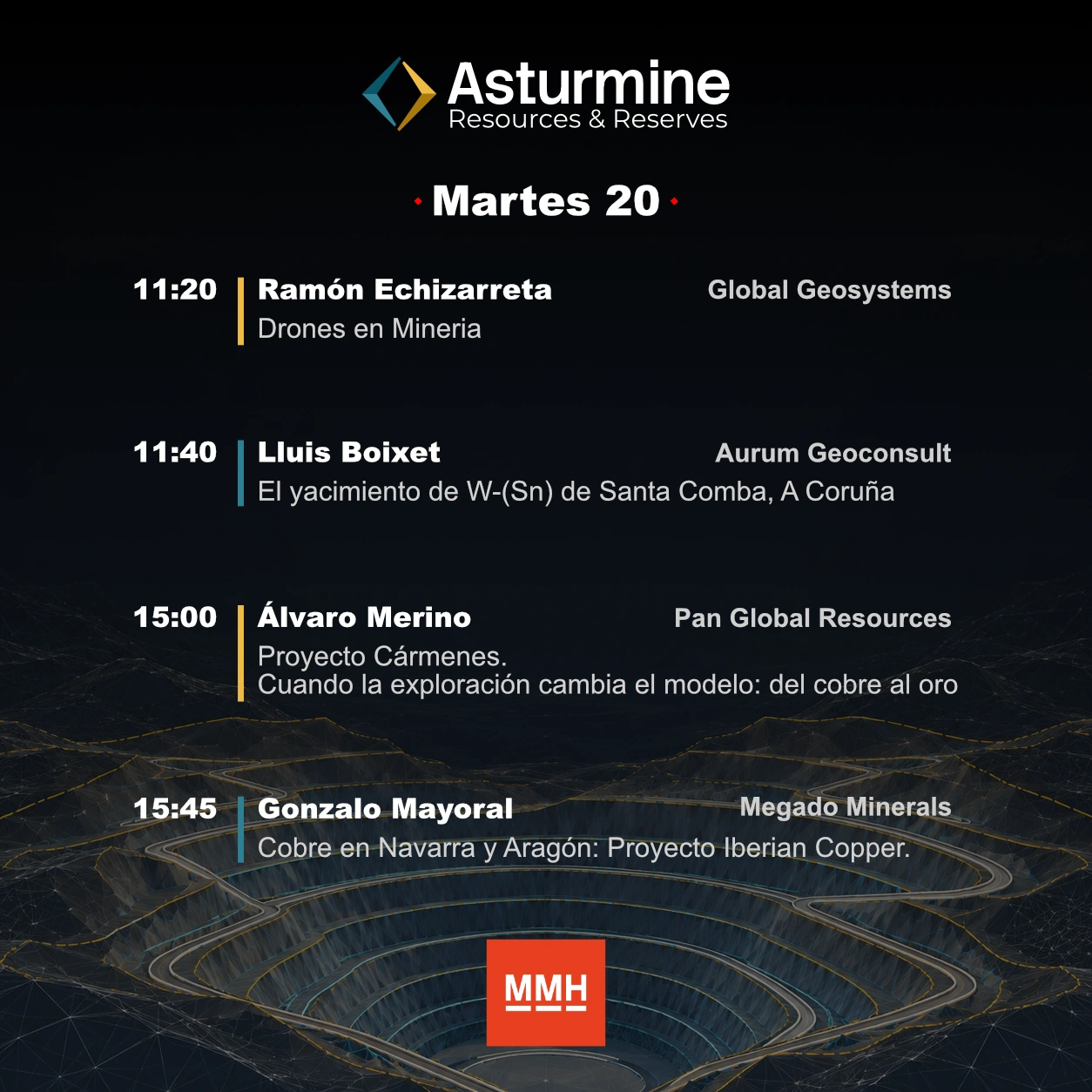
+−View detailsHide details: Drones in mining.
Drones have become a highly useful tool in mining, providing accurate, up-to-date information on operations quickly, efficiently and safely.
Technologies such as photogrammetry, LiDAR and thermography support surveying, volume calculations, mine monitoring, infrastructure inspection and progress tracking, turning captured data into useful information for planning and decision-making.
This talk will offer a practical view of the current applications of these technologies, their capabilities and limitations, and the trends that will shape their development. Drawing on my experience as an underground mine surveyor, I will discuss operational automation, data integration into mining workflows, and advances in navigation and data capture in complex environments, including underground spaces without GNSS coverage. The technical perspective will help explain which solutions are available today and what new opportunities are opening up for the sector.
+−View detailsHide details: The Santa Comba W-(Sn) deposit, A Coruña.
A journey through the mining history and key geological features of one of the most important tungsten deposits in the north-west of the Iberian Peninsula. Lluis will show us the vein and disseminated mineralisation in the granite and its relationship to the granite. He will also discuss resources and exploration potential.
15:00Room: Hall 3 · Asturmine stand 3212
Cármenes. When exploration changes the model: from copper to gold.
+−View detailsHide details: Cármenes. When exploration changes the model: from copper to gold.
What happens when you start exploring for copper… and find gold?
At Cármenes, exploration is doing exactly that: challenging our initial hypotheses and making us look at the mineral system from a different perspective.
At MMH, I will share the story of how systematic exploration—from geochemistry and sampling to drilling—has added new pieces to the puzzle and helped our model evolve from a project initially focused on Cu-Ni-Co into a system where gold has taken on an unexpected prominence.
Because exploration is not about proving that your first idea was right. It is about following the data, asking the right questions and being willing to change the model when geology tells you a different story.
15:45Room: Hall 3 · Asturmine stand 3212
Copper in Navarra and Aragón: the Iberian Copper Project.
+−View detailsHide details: Copper in Navarra and Aragón: the Iberian Copper Project.
Megado Minerals, through Iberian Copper, S.L., is developing two large-scale regional exploration projects.
The first, between Navarra and Aragón, covers the entire Oligocene sandstone formation from Los Arcos (Navarra) to Labata (Huesca), extending almost 200 km, targeting copper mineralisation.
The second covers an extensive area 40 km long in the foothills of the Iberian System around Cariñena (Zaragoza), targeting copper, silver and antimony mineralisation.
Both projects take a broad, systematic exploration approach to identify targets for more detailed investigation, reviving the prospecting spirit of earlier exploration programmes and fitting within the current First National Mineral Exploration Plan.
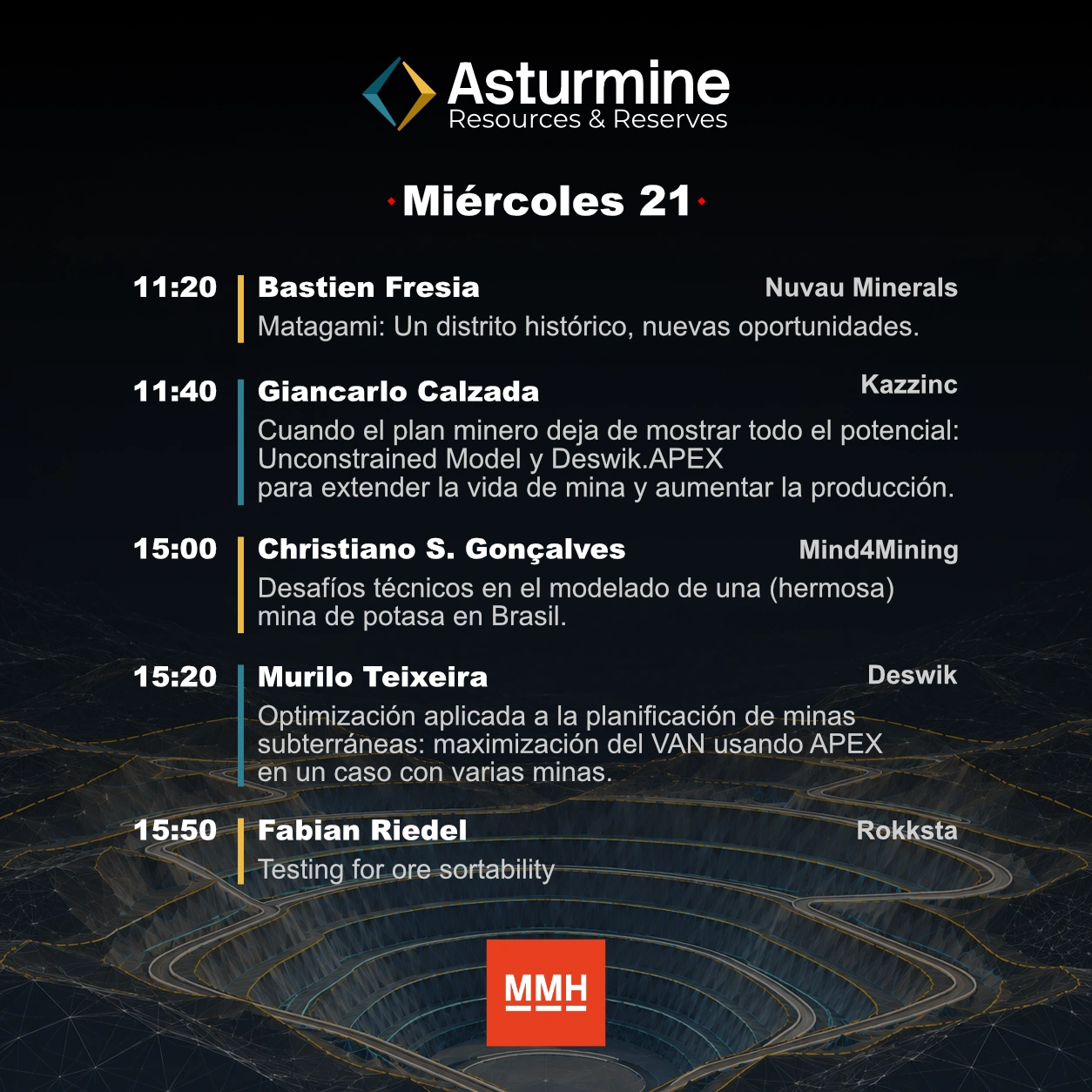
+−View detailsHide details: Matagami: a historic district, new opportunities.
The Matagami mining district in Quebec, Canada, is entering a new phase of development that combines the restart of historic mining infrastructure, exploration for new resources and the recovery of value from metals that were not exploited in the past.
An integrated approach to rediscovering the potential of a district with more than 60 years of mining history.
11:40Room: Hall 3 · Asturmine stand 3212
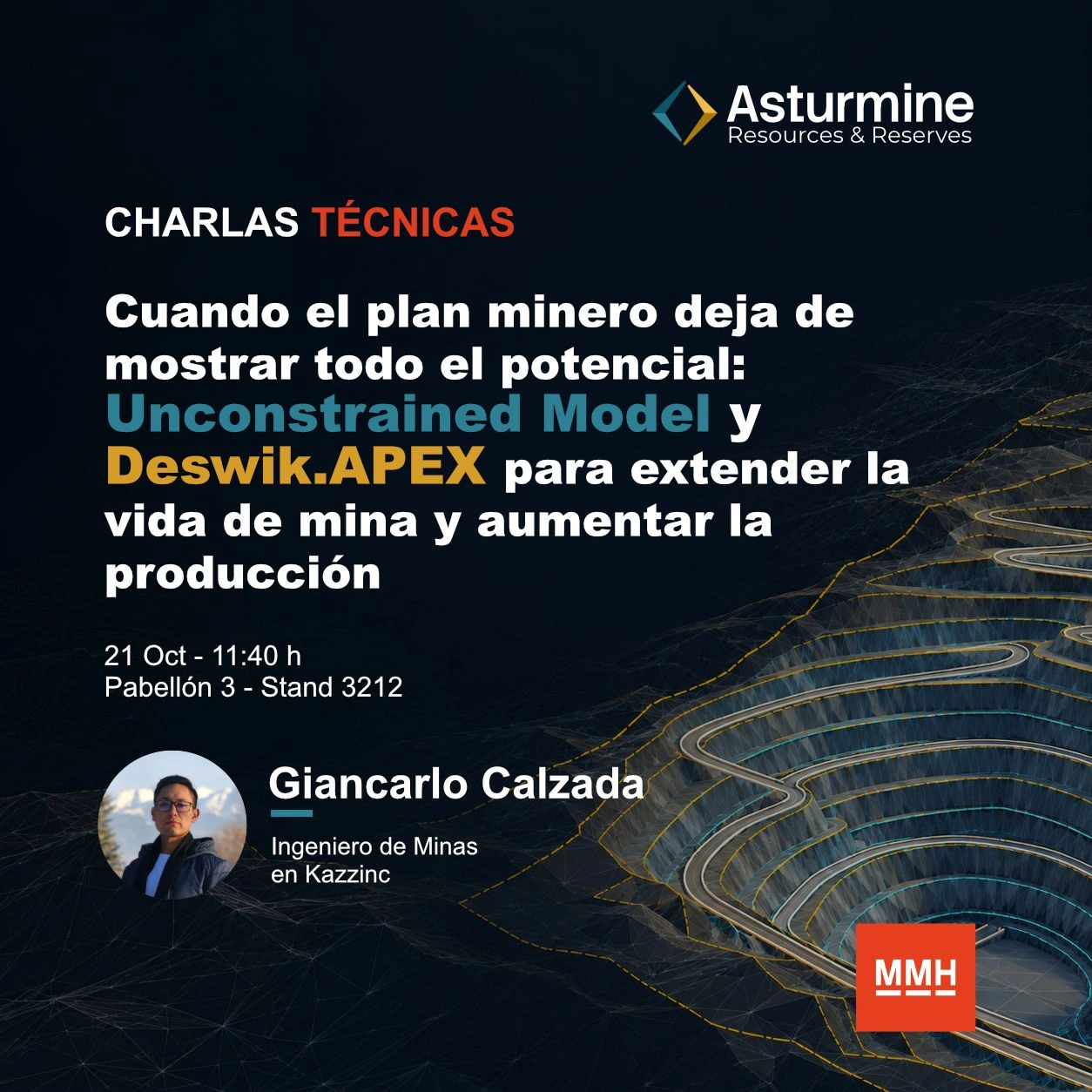
When the mine plan no longer shows the full potential: Unconstrained Model and Deswik.APEX to extend mine life and increase production.
+−View detailsHide details: When the mine plan no longer shows the full potential: Unconstrained Model and Deswik.APEX to extend mine life and increase production.
What happens when a historic underground mine approaches the end of its life, but decades of geological, mining and operational information indicate that potential still exists beyond the current mine plan? And what if an operation still has life ahead of it, but could produce more than its planning suggests?
At MMH, I will present a practical methodology applied to a historic underground mine to assess opportunities beyond the current mine plan and determine whether they can support a longer mine life or higher production.
The approach combines Unconstrained Model, Deswik.APEX and iterative optimisation to connect geology, mine planning and exploration. It identifies potential beyond the mine plan, quantifies how much can be incorporated into a Mining Inventory, assesses the level of production that can be sustained economically, and determines where drilling should be prioritised to reduce uncertainty.
A mine can run out of mine plan before it runs out of geological opportunity. The challenge is to identify that opportunity, demonstrate its value and turn it into a technically defensible plan.
15:00Room: Hall 3 · Asturmine stand 3212
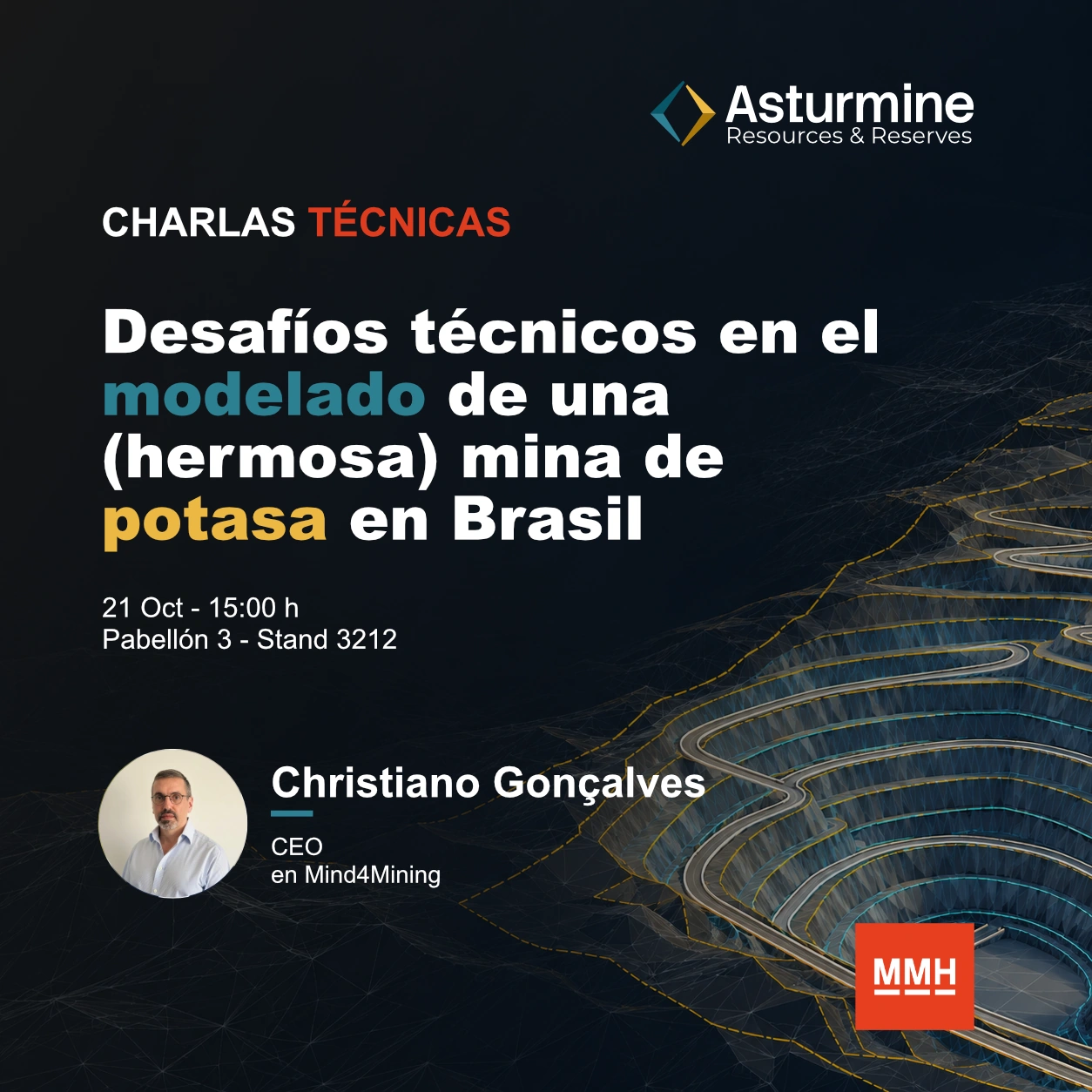
Technical challenges in modelling a (beautiful) potash mine in Brazil.
+−View detailsHide details: Technical challenges in modelling a (beautiful) potash mine in Brazil.
Potash is part of our lives as an important agricultural fertiliser, and Brazil is a major importer.
Part of Brazil’s potash production comes from an underground mine. It presents numerous technical challenges, from drilling to geological modelling and production.
This presentation will illustrate the challenges of working with horizontal boreholes branching from a main drillhole for geological modelling and KCl grade estimation, while respecting the stratigraphic framework of one of the most beautiful underground mines I know.
15:20Room: Hall 3 · Asturmine stand 3212
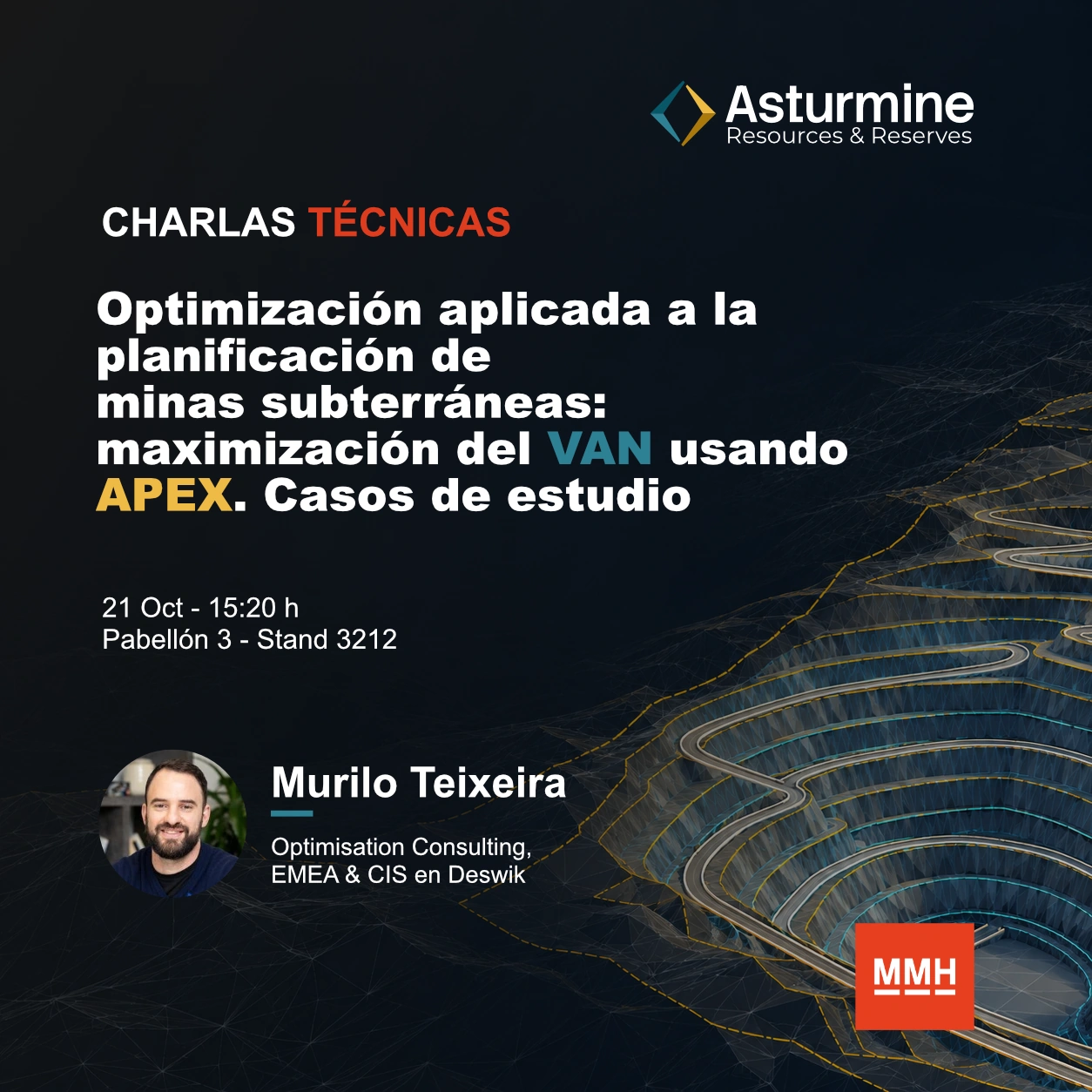
Optimisation applied to underground mine planning: maximising NPV using APEX in a multi-mine case study.
Technical Lead – Optimisation Consulting, EMEA & CIS · Deswik
+−View detailsHide details: Optimisation applied to underground mine planning: maximising NPV using APEX in a multi-mine case study.
How can we obtain the maximum value from a mining operation when we have several mines, multiple mining alternatives and limited resources?
In underground mine planning, finding a technically feasible solution does not always mean finding the most profitable one. The mining sequence, resource allocation and decisions about when and where to produce can have a significant impact on the project’s Net Present Value (NPV).
At MMH, I will share a practical optimisation case using Deswik.APEX, exploring how to evaluate different planning scenarios and coordinate several mines to maximise the operation’s economic value.
Optimising a mine plan is not only about extracting more ore or increasing production. It means making the best decisions about what to mine, when to mine it and how to use available resources to generate the greatest possible value.
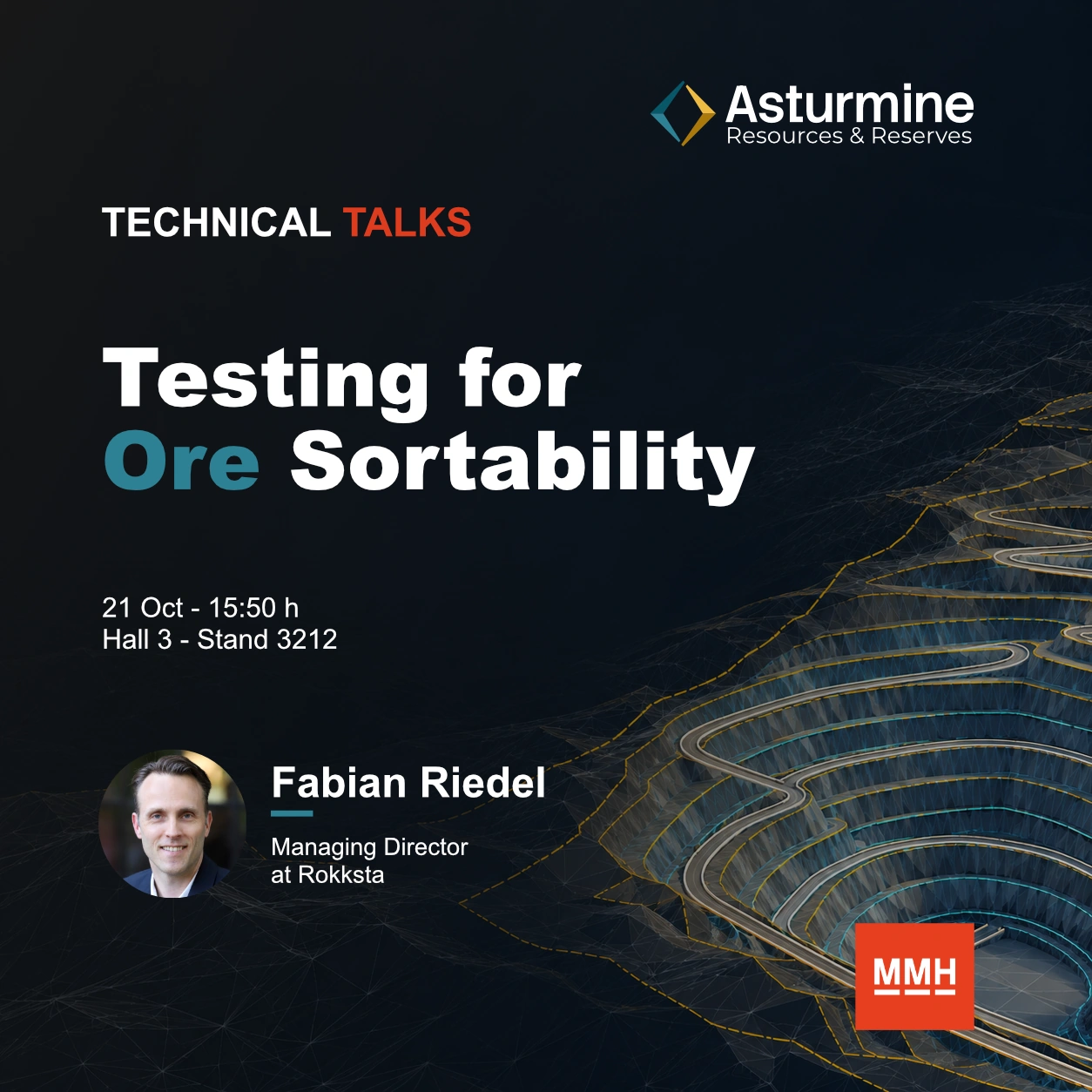
+−View detailsHide details: Testing for Ore Sortability.
I will show how to find out, before investing, whether an ore can be pre-concentrated with XRT sorting, with a focus on the Iberian Pyrite Belt.
I’ll cover the three-step testing method, ROKKSTA’s own XRT scanner, and how lab results become a plant design.
I will also explain how Asturmine’s geological expertise and ROKKSTA’s sortability testing work together, from the orebody to the sorter.
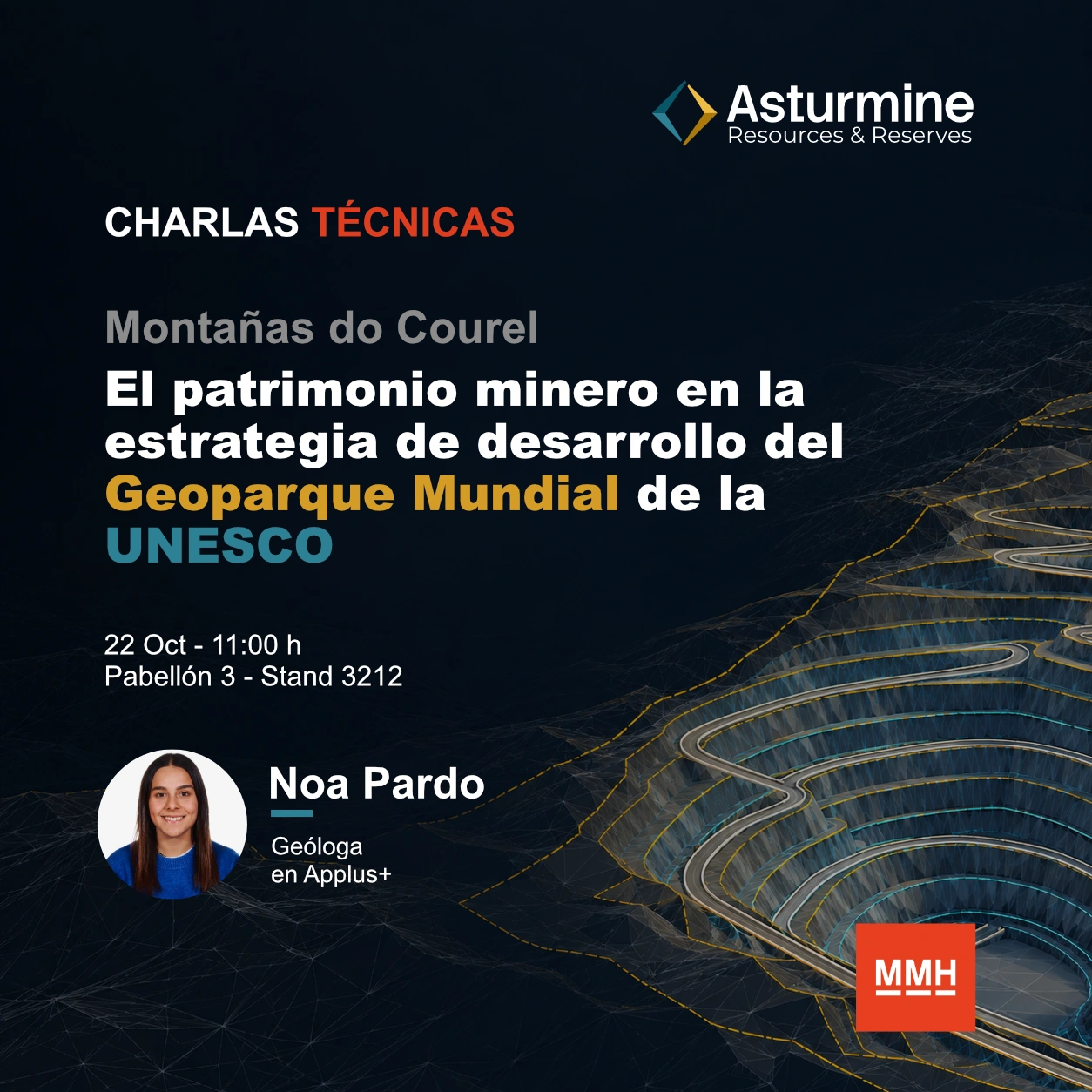
11:00Room: Hall 3 · Asturmine stand 3212
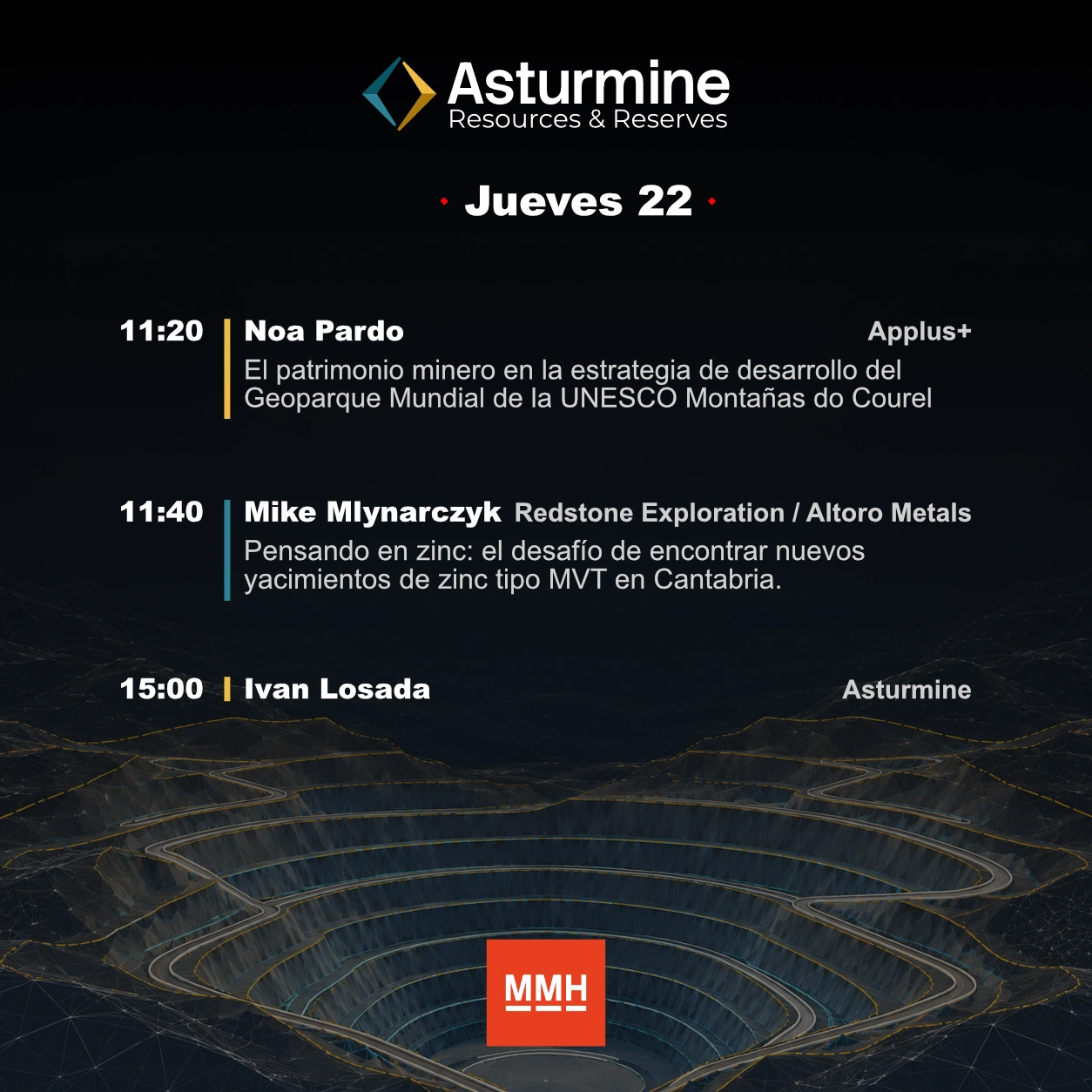
Mining heritage in the development strategy of the Montañas do Courel UNESCO Global Geopark.
+−View detailsHide details: Mining heritage in the development strategy of the Montañas do Courel UNESCO Global Geopark.
What if a mine’s last resource were its own history?
In Courel, mining has left its mark for two thousand years: primary and secondary Roman gold, iron workings and ironworks on the Palaeozoic sequence of the Variscan recumbent fold, the stibnite of Vilarbacú, and slate mining that remains active.
At MMH, I will explain how the Geopark turns that legacy into development. The work starts with a GIS inventory and geological, mineralogical and archaeological research, and extends to geotourism, geoeducation and heritage protection.
Because when extraction ends, the mine continues to explain how geology has shaped the landscape, settlement and economy of the territory.
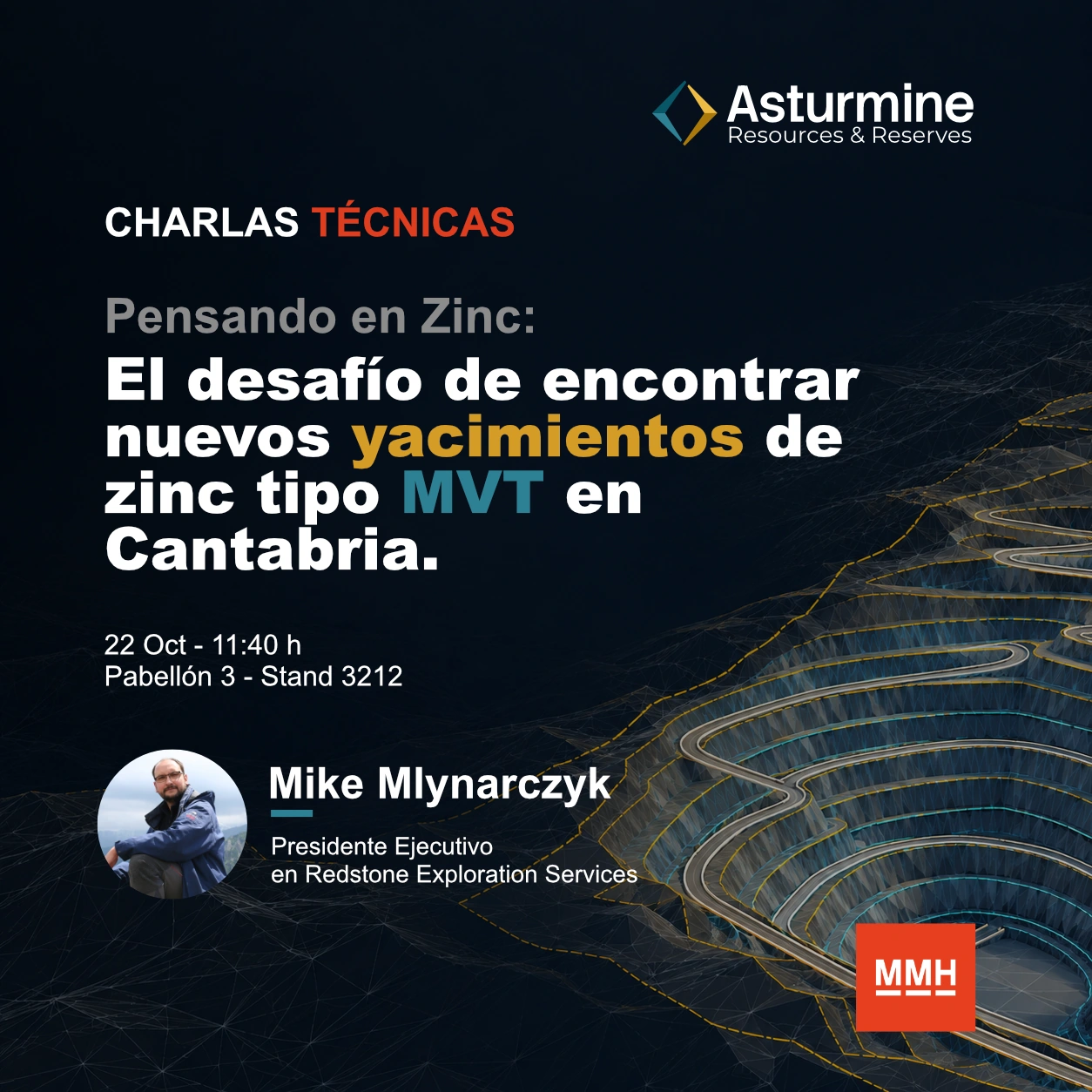
11:40Room: Hall 3 · Asturmine stand 3212
Thinking zinc: the challenge of finding new MVT-type zinc deposits in Cantabria.